Pile Foundation Cages Galvanised
Galvanised Pile Foundation cages for retaining wall pile foundations
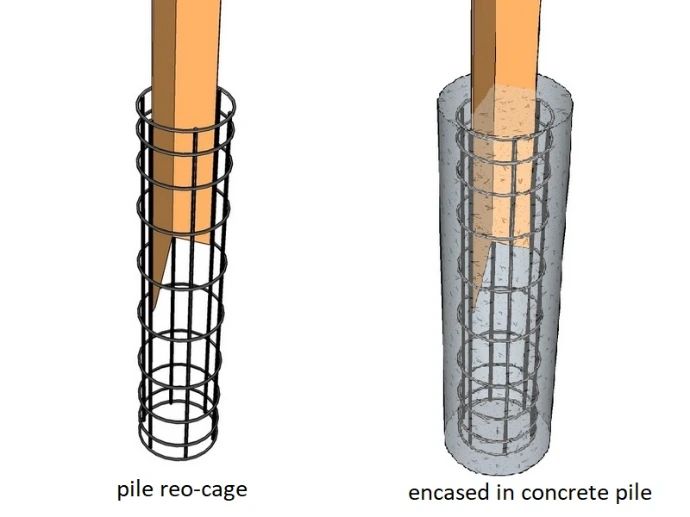
280mm diameter pile cages
10mm deformed vertical bars
8mm stirrups
330mm diameter pile cages
10mm deformed vertical bars
8mm stirrups
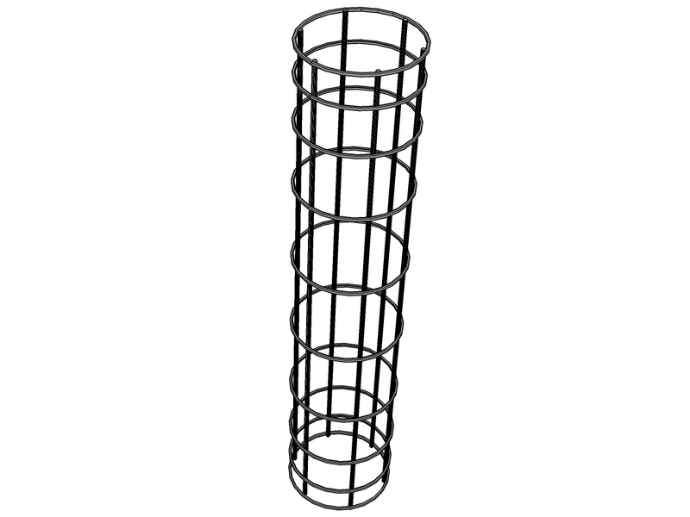
Cage Height
1200mm
1400mm
1600mm
1800mm
2100mm
2400mm
Common uses for pile foundation cages
Reinforced pile cages (steel rebar skeletons) are becoming increasingly common in high-end and challenging residential builds. From steep hillsides to swampy coastal land, these cages provide the structural "sinew" that keeps a home from sinking or shifting..
1. Homes on Unstable or "Soft" Soils
In areas with high clay content, peat, or uncompacted fill, standard shallow footings will settle unevenly. Reinforced pile cages allow builders to create deep bored piles that bypass the unstable topsoil, anchoring the home into firmer strata or bedrock below.
2. Steep Hillside and Sloping Lot Foundations
Building on a slope requires resisting both vertical gravity and lateral soil pressure. Pile cages are essential for retaining piles that "pin" the house to the hill, preventing the structure from sliding and providing a level platform for the subfloor.
3. Coastal and Flood-Zone Elevations
To protect homes from storm surges and rising tides, houses are often elevated on piles or columns. Reinforced cages within these piles ensure they can withstand the "scour" (erosion) of water moving around them and the impact of floating debris during a flood.
4. High-End Swimming Pool Structural Support
Modern luxury pools, especially "infinity edge" designs on sloped ground, are incredibly heavy. To prevent the pool from cracking or "walking" away from the main house, engineers use mini-piles with tight-pitch reinforcement cages to support the massive weight of the water.
5. Basement Excavations (Secant/Contiguous Piling)
When digging a residential basement in a tight urban space, reinforced pile cages are used to create a contiguous pile wall. This acting as a permanent structural support and a temporary retaining wall, allowing for safe deep excavation right up to the property line.
6. Ground-Level Extensions and Renovations
Adding a heavy second story or a large masonry extension to an existing home often exceeds the original foundation's capacity. Micropiles with small-diameter reinforced cages can be installed with limited-access rigs to support the new loads without demolishing the old house.
7. Foundations Near Protected Trees
Local regulations often prohibit traditional trenching near "significant trees" to protect their root systems. Bored piles with reinforced cages allow for "surgical" foundation placement, spanning over roots and minimizing the building’s footprint on the ecosystem.
8. Seismic Retrofitting for Earthquake Zones
In earthquake-prone regions, older homes are often retrofitted with new piles. The steel cages within these piles provide the ductility (flexibility) needed to absorb seismic energy, preventing the foundation from snapping during ground tremors.
9. Heavy Masonry and Stone Cladding Support
Modern residential architecture often features heavy stone facades or "living walls." These aesthetic choices add significant weight. Reinforced pile cages in the footings ensure that these concentrated loads are transferred deep into the ground, preventing localized sinking.
10. Cantilevered Decks and Overhanging Structures
For homes designed with dramatic overhangs or cantilevered balconies, the "anchor" point must be incredibly strong. Deep piles with heavy-duty reinforcement cages provide the tension resistance necessary to counterbalance the weight of the structure hanging over a cliff or garden.
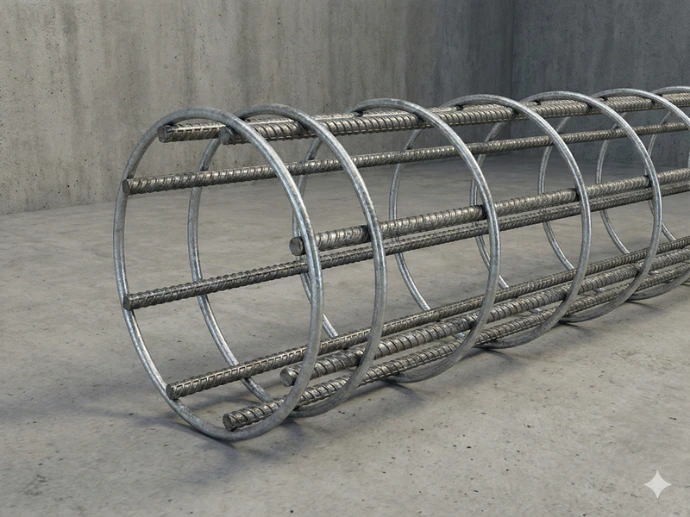
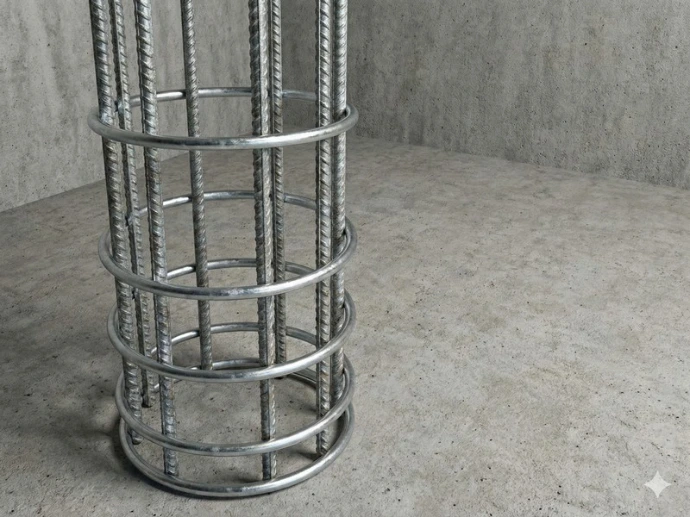
Each reinforcing foundation cage is welded then hot dip galvanised
Galvanised reinforcing extends the pile foundation lifespan, as the steel will resist
n the construction of buried pile foundations, the environment is often aggressive due to varying soil chemistry, moisture levels, and chloride presence. Using Hot-Dip Galvanized (HDG) reinforcing steel offers a robust solution to these challenges by providing both chemical and physical protection to the structural core.
1. Extended Service Life
Galvanized steel can significantly extend the design life of a foundation. In many soil environments, the zinc coating provides protection for 75 to 100 years, which is critical for deep foundations that are impossible to access for repair once the structure is built.
2. Sacrificial (Cathodic) Protection
Unlike paint or epoxy, zinc acts as a sacrificial anode. If the coating is scratched during the rigorous process of pile driving or cage lowering, the surrounding zinc will corrode preferentially to protect the exposed steel. This ensures that minor damage does not lead to localized structural failure.
3. Reduced risk of Concrete Spalling
The most common cause of spalling is when moisture and oxygen reach steel rebar, causing rust (iron oxide) that expands up to six times its original volume, cracking the surrounding concrete. When rebar is too close to the surface, it's more vulnerable to moisture and corrosion or Subpar concrete mix, Therefore using a galvanised reinforcing cage is a superior option.
4. Superior Abrasion Resistance
The hot-dip galvanizing process creates a series of zinc-iron alloy layers that are metallurgically bonded to the steel. These layers are actually harder than the base steel itself, making the rebar highly resistant to the mechanical "scuffing" and abrasion that occurs when piles are driven or cast into rough soil.
5. Higher Chloride Tolerance
In coastal or brackish groundwater areas, chloride ions eventually penetrate concrete. Galvanized steel has a chloride threshold roughly 2.5 times higher than that of black steel, meaning it can withstand much higher concentrations of salt before the corrosion process even begins.
6. Robust Barrier Protection
The zinc coating provides a physical barrier that is completely impermeable to moisture and oxygen. Because the coating is applied by immersion, it covers 100% of the surface area, including the "shadow" areas of complex reinforcement cages and the interior of hollow piles.
7. Excellent Concrete Bond Strength
Research shows that galvanized reinforcement maintains a bond strength with concrete that is equal to or better than uncoated steel. The initial reaction between zinc and wet cement creates a microscopic layer of calcium hydroxyzincate, which actually enhances the mechanical grip between the bar and the concrete matrix.
8. Resistance to Soil pH Fluctuations
Deep foundations often pass through different soil strata with varying acidity. Galvanized steel performs exceptionally well in the typical pH range of soils (pH 6 to 12.5). It is particularly effective in the highly alkaline environment of the concrete surrounding the pile.
9. Reduced Maintenance and Lifecycle Costs
While the initial cost of galvanized steel is higher than black steel, it eliminates the need for future remedial work. For buried piles, where "repair" often means incredibly expensive underpinning or replacement, the maintenance-free nature of HDG steel provides superior long-term value.
10. Predictable Performance
The corrosion rate of zinc in soil is well-documented and predictable based on soil resistivity and moisture. Engineers can use these standardized rates to calculate the exact thickness of zinc required to meet a specific design life, removing the "guesswork" often associated with raw steel foundations.
11. Environmental Sustainability
Galvanized steel is a sustainable choice for infrastructure. Zinc is a naturally occurring element, and both the zinc and the steel core are 100% recyclable. By doubling or tripling the life of a foundation, you significantly reduce the carbon footprint associated with premature demolition and reconstruction.
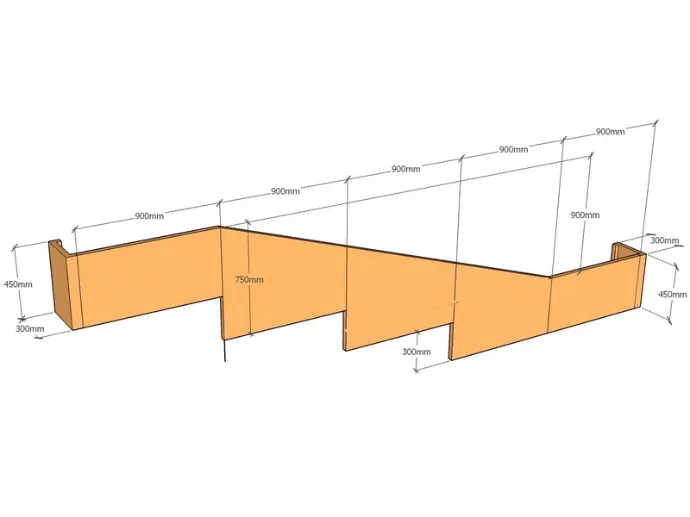
Free Layout Assistance
Our extensive collection of retaining wall ideas and designs is just the beginning. We don’t just offer inspiration; we provide crucial assistance with design and layout, helping you translate your vision into a practical, beautiful reality.
You can send us your sketches or drawings, and our team will work with you to refine the concept, ensuring optimal parts selection for durability and visual appeal. From initial concept to final execution, we’ll help you unlock the potential of your property, ensuring you achieve the best retaining wall solution to enhance its beauty and functionality.
15 jan 2026