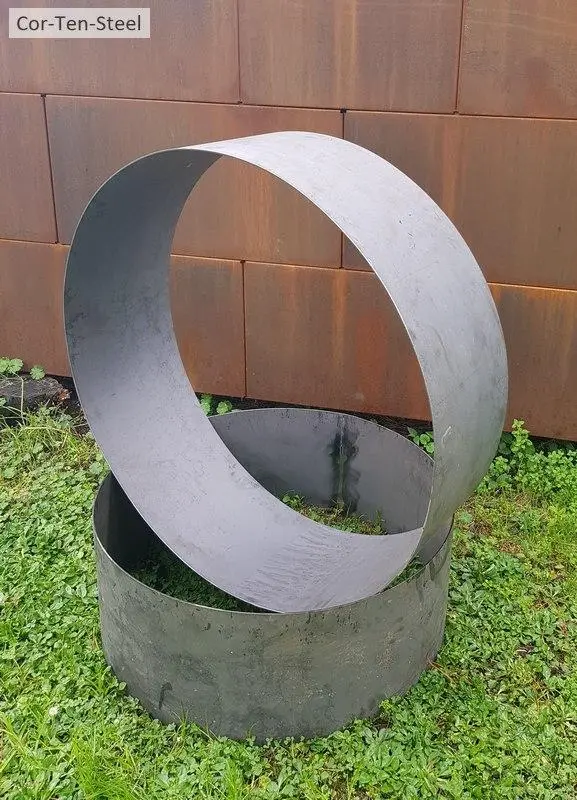
HOW LONG DOES CORTEN STEEL LAST?
Lifespan, Rust & Aging Guide
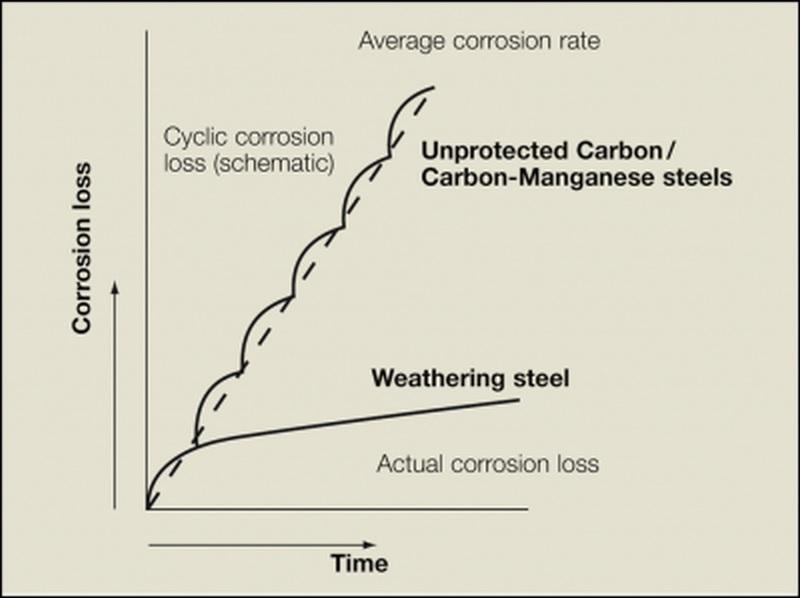
Will My Corten Steel Landscape Last? The Truth About Lifespan
Corten steel landscaping is prized for its striking orange patina and incredible durability. But a common question from homeowners and contractors is: "Does Corten steel rust through?"
The short answer is: It depends on how you install it.
While Corten (or weathering steel) is engineered to last decades above ground, it faces different challenges when buried in soil. To ensure your garden edging and retaining walls stand the test of time, you need to understand the simple engineering behind it.
The Corten Lifespan Formula
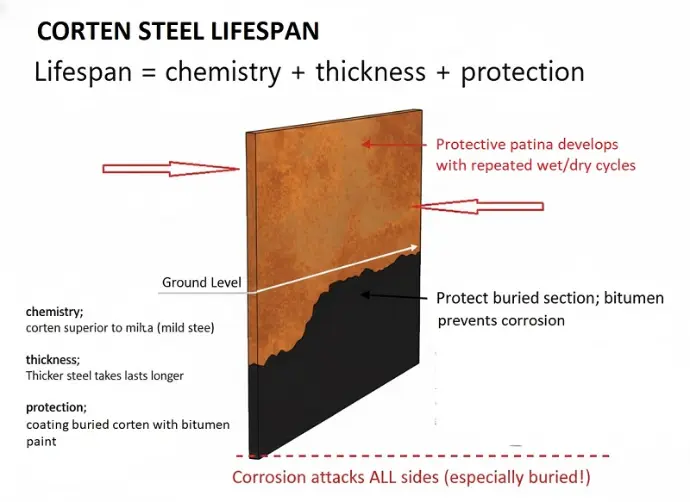
A long-lasting installation isn't magic; it’s math. The longevity of your steel comes down to three factors:
Lifespan = Chemistry + Thickness + Protection
Chemistry: Authentic Corten steel contains specific alloys (copper, chromium, and nickel) that allow a stable, protective rust "skin" (patina) to form on the surface.
Thickness: All steel corrodes eventually. The thicker the steel, the longer it survives.
Protection: In aggressive environments—like wet soil—additional barriers are required.
The Underground Reality: Corten Steel in Soil
Corten steel needs a "wet/dry" cycle to build its protective patina. However, buried garden edging stays constantly damp. In these conditions, the steel cannot seal itself and will continue to corrode.
Corrosion Rate: Buried Corten generally loses approximately 0.5mm of thickness every 5 to 10 years as moisture attacks from both sides.
The Fix: We recommend applying a bitumen paint barrier to the bottom section of any steel being buried. This simple step seals the metal against constant ground moisture, significantly extending the life of your landscape design.
Increase the thickness: Just as half a tank of petrol only lasts half as long as a full tank of petrol. 1.5mm thick corten has half the lifespan of 3mm solid corten,
Solid Steel Edging vs. Rolled Top: Don't Be Fooled
When searching for "Corten steel garden edging," you will see two main types: Solid and Folded (or Rolled Top).
Many suppliers use a "folded top" to create the illusion of thickness. It looks robust from above, but it creates a critical weakness underground.
| Feature | Folded / Rolled Top Edging | Solid Steel Edging |
| Profile | Hollow Loop: A thin sheet bent to look 5mm to 7mm wide. | Solid Mass: A dense slab of steel (e.g., 6mm) all the way through. |
| Corrosion Risk | High: Corrosion attacks the thin walls (often <1.5mm) from both inside and outside. Once the thin wall perforates, the edge collapses. | Low: Even with natural corrosion, there is a massive amount of "sacrificial" steel. |
| Durability | Short to Medium Term: Vulnerable to rapid failure underground. | Long Term: Maintains structural integrity for decades. |
The Bottom Line:
Don't pay for air. Solid steel edging offers superior value because it provides the actual raw mass needed to withstand the harsh underground environment.
FAQ: Common Corten Steel Lifespan Questions
How thick should Corten steel edging be? For structural longevity, "thickness" should refer to the wall thickness, not the top width. We recommend solid steel (3mm–6mm) rather than thin-gauge folded profiles.
Do I need to seal Corten steel? Above ground, no—the protective rust patina acts as the sealer. Below ground, yes. Applying a bitumen coating to the buried section is the best way to prevent premature corrosion.
Do I need to waterproof the back of my retaining wall? Absolutely. The soil behind the wall stays damp, creating a constant "corrosion zone" that attacks the metal from the rear.
The Fix: Apply a heavy coat of bitumen paint to the back of the steel before backfilling.
The Bonus: Install proper drainage (like scoria or gravel) directly behind the wall to prevent waterlogging, which accelerates rust.
Will my Corten planter rust out from the inside? Yes, if left unprotected. The soil inside a planter box keeps the steel constantly damp, preventing the protective patina from forming on the interior face.
The Solution: Treat the inside of your planter exactly like buried edging. Apply bitumen paint to the entire interior surface to seal the steel from the wet soil.
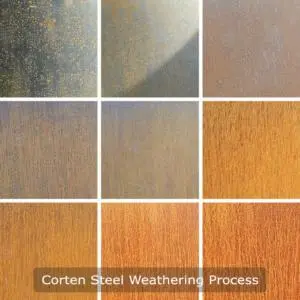
Corten steel slowly weathers over time
Image of pitted, blistering, flaky mild steel
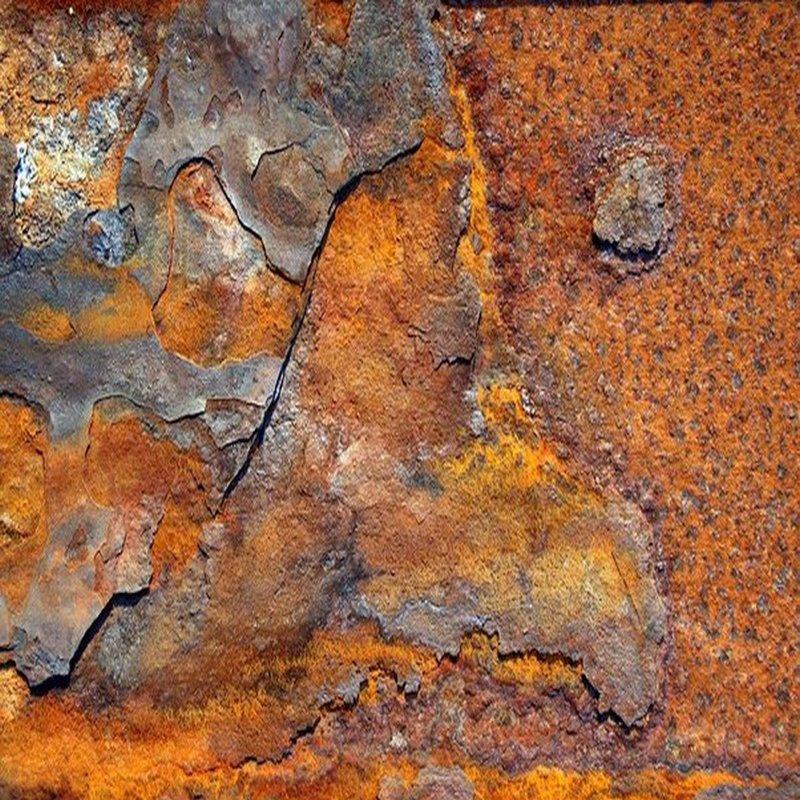
Mild steel is not just like corten, it corrodes quickly with large flakes
Image of pitted, blistering, flaky mild steel
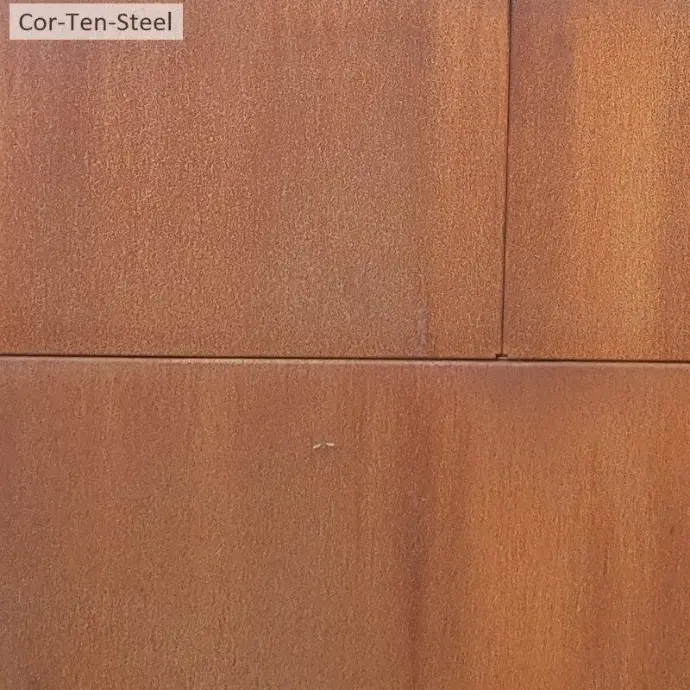
Genuine corten steel does not flake or blister
Corten steel slowly weathers over time
It is recommended that the buried portions of the metal be coated with a bitumen damp proof membrane
We do not endorse the use of any accelerated rusting options suggested by fake internet gurus.
Stop! Don't Rush the Rust
You bought Corten for that deep, velvety burnt orange that glows in the sunset. It’s a living material. When it arrives, it will likely be a cool, industrial blue-grey. I know the temptation to force that transformation is strong—especially when you want the yard finished by the weekend—but I need you to put the vinegar bottle down.
The "Internet Hack" Trap
I’ve seen the TikTok videos and the forum posts promising "instant rust" using acids, peroxide, and salt. As someone who has installed thousands of feet of this steel, let me tell you what actually happens when you use those harsh chemicals:
You kill the lifespan: Corten works by developing a protective "skin" of rust. Acids eat through the steel before that skin can form, weakening the metal structurally.
The finish looks cheap: Accelerated rusting results in a flat, streaky, unnatural orange that flakes off on your clothes and patio.
Permanent damage: When chemically burned often the only option is to start over with new corten. Once you shock the steel, you can't undo the blotchy, uneven results.
How to Get That Deep, Rich Patina
Real landscape design is about patience. The chemical reaction that creates those stunning, earthy tones requires a natural rhythm of Wet and Dry Cycles.
Rain/Water: The steel gets wet, starting the oxidation process.
Sun/Wind: The steel dries completely, locking in the patina.
This process takes months, not minutes. But the result is a textured, durable finish that shifts beautifully with the light and protects the steel for decades.
The Golden Rule: Treat It Like Your Car
If you wouldn't pour it on the bonnet of your car, don't pour it on your Corten.
Cleaning: Use mild detergent and water only.
Maintenance: Keep it free of wet leaves or debris piles that prevent drying.
Patience: Let nature do the heavy lifting. The result will be worth the wait.
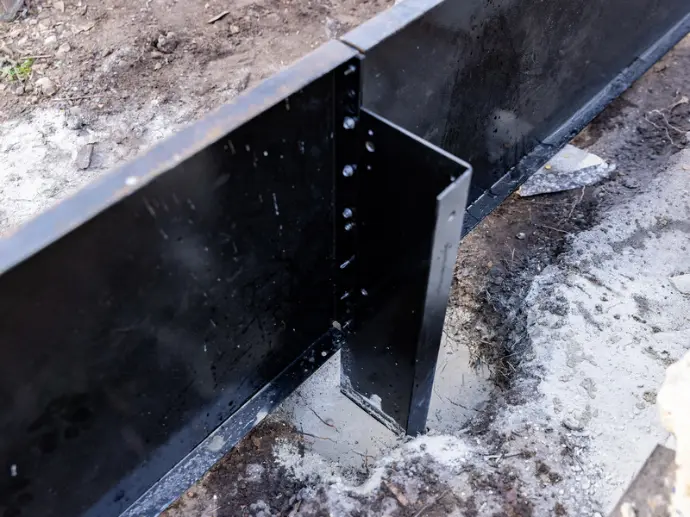
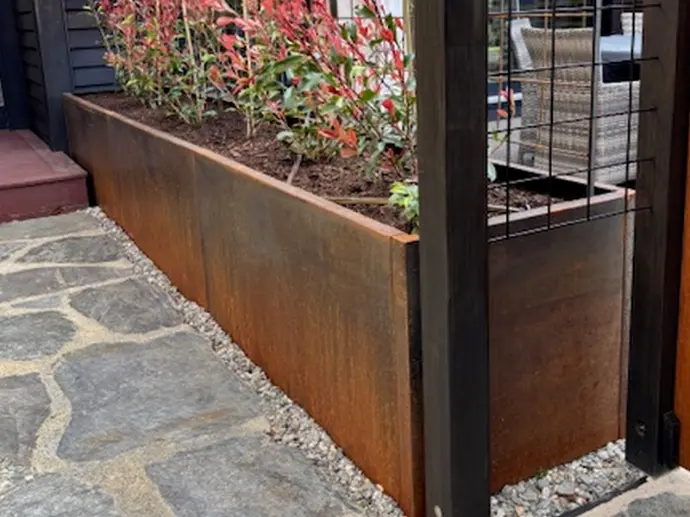
Protect the backs of planters and retaining walls
The backs of the corten panels and support posts have been coated with bitumen, such as SikaTite BE Bitumen waterproofer or equivalent
Nominal loss of thickness for each 10yr period
Location | First 10yr period mm | Subsequent 10yrs mm |
|---|---|---|
Rural | 0.10 | 0.05 |
Urban* | 0.20 | 0.05 |
Industrial** | 0.20 | 0.10 |
* With the chief impurity in the air being sulphur dioxide
** In addition to sulphur dioxide the air also contains chlorine. Also for locations in the immediate vicinity of salt water
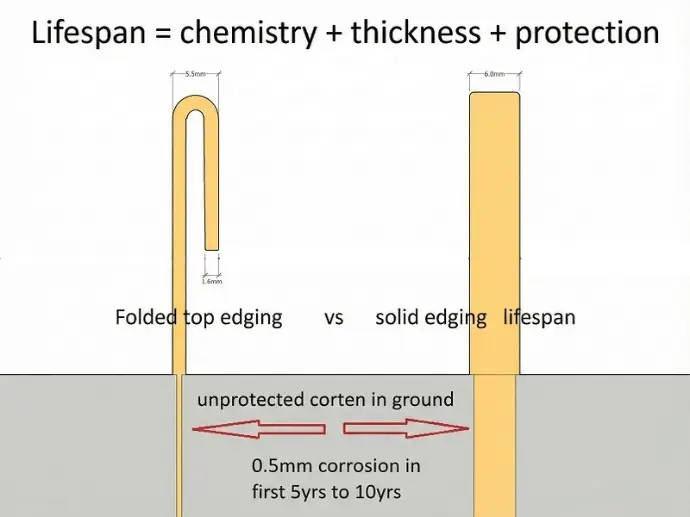
Choose Mass, not illusion, Solid Lasts Longer
Thin folded top edging vs Solid edging
Suppliers of thin edging often fold the top over for the illusion of thickness, our Cor-ten-steel edging is a solid 3mm or 6mm thick.
In 5ys to 10yrs time 1.6mm or even thinner edging is likely to have corroded to the point of failure
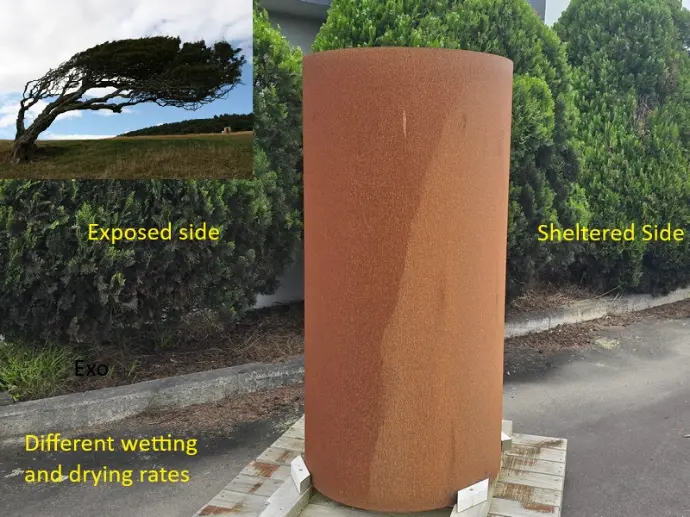
Corten rust patina
It takes repeated wet/dry cycles for the protective rust patina to develop. different wetting and drying rates will result in a some areas developing the patina a different rate to other areas.
The inherent nature of the rusting process, is that variations in colour, hue and texture should be expected, these variations are not considered flaws or defects
Cor-Ten steel is sold un-weathered (grey/blue steel) and will produce a rust run-off which will may stain stone, concrete, and decking surfaces. To limit staining to surrounding surfaces, designers incorporate gutters and gravel traps to direct the rust runoff away from surfaces, that could be stained
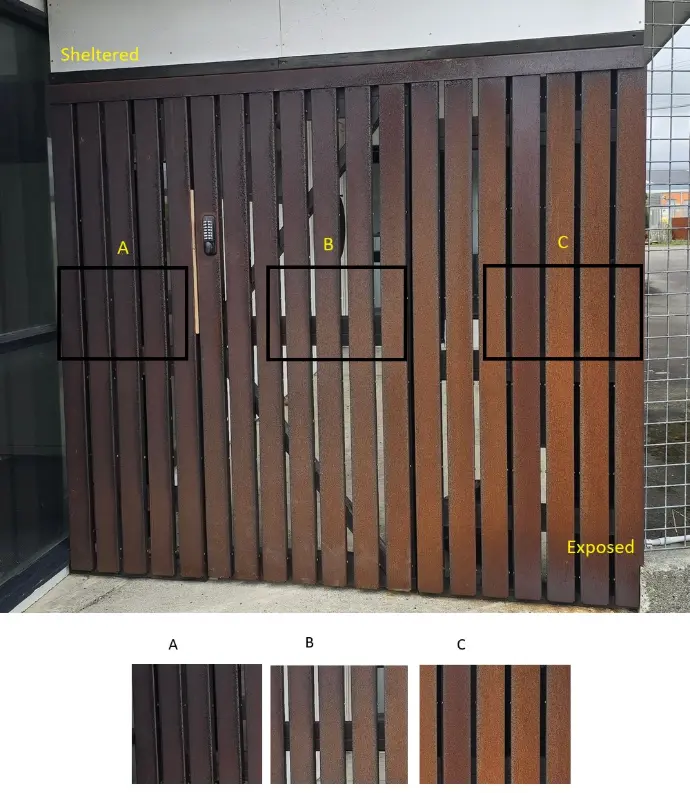
Example of shade variations due to different exposures to weather
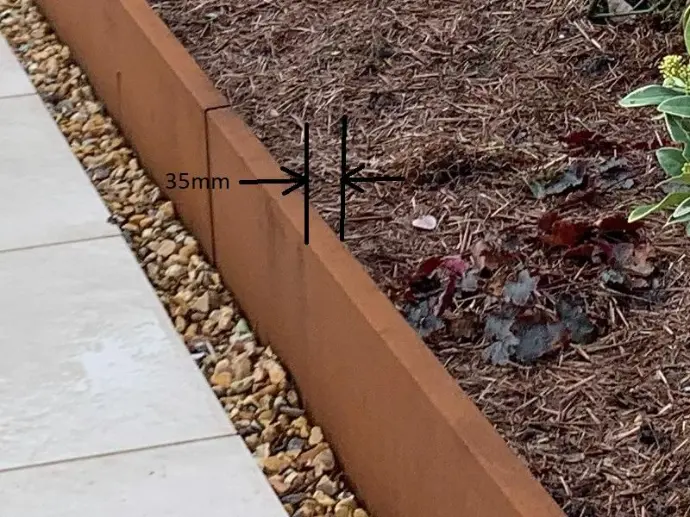
The Truth About Corten: Managing the Bleed
Having supplied hundreds of Corten planters over the years. We love them for that deep, velvet-textured amber glow that shifts with the morning sun. It provides a striking contrast against deep green foliage that you just can't get with plastic or timber.
But you need to respect the material. To quote Neil Young: Rust never sleeps.
Corten doesn't stop rusting; it just oxidizes slower as the years pass. While the patina eventually forms a protective layer, rain will always wash small amounts of iron oxide down the sides of the planter.
The Myth of the "Grass Phase"
A common DIY trick is to let the planter weather on your lawn for a month or two before moving it to its final spot.
The Good: This keeps the heavy, initial "shock" of orange runoff off your hardscaping.
The Bad: It doesn't stop the process. If you move that planter onto porous limestone, sandstone, or concrete, the slow-drip of subsequent rust will eventually mark the stone.
The Pro Move: The Gravel Trap
If you want that architectural look without scrubbing orange stains off your pavers every spring, build a Gravel Trap. This is how professional landscapers install them in high-end residential projects to control the runoff.
Create a Border: Instead of sitting the metal directly on your patio, leave a 50mm-75mm gap between the planter and your paving.
Fill with Aggregate: Fill this gap with dark river rock, crushed basalt, or charcoal slate.
Let it Bleed: The rust runs off the metal and vanishes into the dark stones.
The Result: You get the warmth of the steel, your expensive patio stays clean, and the dark gravel creates a "shadow gap" that makes the planter look like it’s floating.
Stop. Put Down the Sealer.
I know the temptation. You’ve just installed your Corten steel features. They have that rich, warm orange glow, and you want to freeze time. You want to "protect" it.
I have spent over twenty years watching homeowners try to outsmart the chemistry of Corten. Here is the reality: sealing Corten steel is a guaranteed way to ruin the aesthetic you paid for.
If you try to coat rusty metal with a clear lacquer or varnish, you are signing yourself up for a maintenance nightmare.
Why Sealing Always Fails
You Can’t Paint Dust: Paint needs a clean, solid surface to grip. Rust is, by definition, an unstable, powdery layer. When you apply a sealer, it bonds to the rust particles, not the steel. As the rust naturally shifts, the sealer lifts right off.
The "Plastic Wrap" Effect: Most exterior clear coats cannot handle constant sun exposure. Over time, UV rays break down the chemical bonds in the lacquer. That crystal-clear finish you wanted will turn milky, opaque, and yellow. Instead of deep, velvety steel, your garden feature will look like it’s wrapped in old, dirty plastic.
The Flaking Mess: Once the sealer becomes brittle from the sun, it starts to crack and peel. To fix it, you can’t just paint over it. You have to strip the entire piece down to bare metal—hours of sanding or expensive chemical stripping—just to get back to where you started.
The Professional Approach: Let It Breathe
Corten is designed to rust. That outer layer of oxide is actually a protective shield that stops corrosion from going deeper. It heals itself.
Trust the Process: Let the steel weather naturally. It will shift from a bright, dusty orange to a deep, dark mahogany over the years.
Zero Maintenance: The best part about Corten is that you install it and walk away. No sanding, no sealing, no back-breaking upkeep.
Save your money and your weekend. Let the steel do the work, and enjoy a finish that gets better with age, not worse.
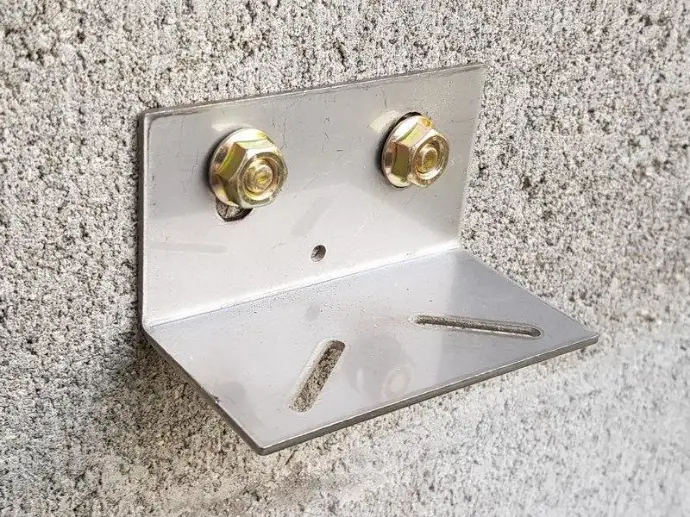
Stainless Steel
Stainless Steel TEK screws or bolts should be used to fasten the corten weathering steel. Do not use zinc coated screws as this will result in bimetallic corrosion which occurs when dissimilar metals are in contact
The zinc anode will quickly corrode when an electrolyte (water) is present
Corten is not permitted to fix directly to galvanised steel, electrolytic isolation pads must be fitted to prevent any direct contact
Zinc flashings should not be in direct contact with corten, to avoid dissimilar metallic corrosion due to the large surface area of zinc in contact with the corten . A solution can be to install a non conductive permanent insulation layer between the two dissimilar metals
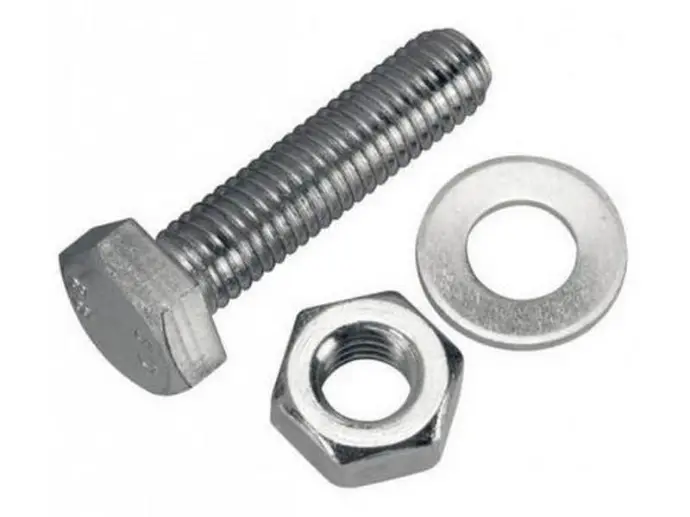
Stainless steel fixings
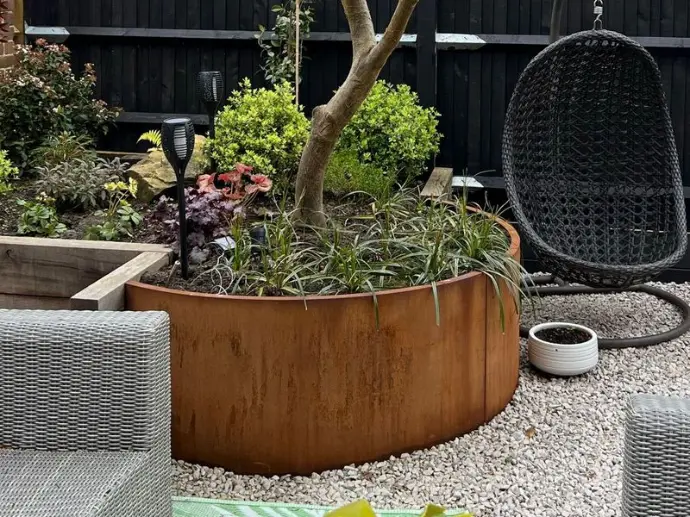
Corten Steel Properties
There is no warranty with unprotected raw steel, the specifier matches the expected environment conditions and the selected thickness of steel, to arrive at a prediction of the expected life span. Domestic landscaping applications may be happy with an expected life span of 30yrs plus, while bridge engineers often require 120yrs plus
Shipping container are made from corten steel, and are then painted to extend there economic life.
ASTM A606-4 or Q355NH commonly referred to as Corten,
Chemical composition(%)
C:≤0.16 Si≤0.5 Mn:0.5-1.5 P≤0.03 Cr:0.4-0.8 Cu:0.25-0.55
Mechanical property
Yield strength/Mpa:≥355
Tensile strength/Mpa:490-630
Elongation/%≥22
Lesser grades of steel, should not be referred to as corten, but can be called a weathering steel, we do not sell these lower grades, as the lifespan is less than ASTM A606-4 or Q355NH