Raised Garden Bed Ideas
10 Professional Garden Bed Ideas for your backyard
Let’s talk dirt. I have spent four decades designing high-end gardens, but I have also pushed the heavy wheelbarrows and laid the pavers myself. I know the gap between the dream of a tidy, structured yard and the sweat it takes to build it.
You want a sharp, orderly garden. You also want to skip the rotting wood, the mud on your knees, and the dull lower-back ache that comes with wrestling heavy materials. If you are searching for raised garden bed ideas, you need something that works hard and ages beautifully. You need a setup that makes the neighbors jealous, without requiring a contractor to install it.
The Foundation: What Makes a Raised Bed Actually Work
Before we talk materials, you need to get the basics right. A poorly placed box is just an expensive weed trap.
Depth matters: Roots need room to dive. Aim for at least 12 to 18 inches of depth for heavy feeders like tomatoes, carrots, and potatoes.
Location is everything: Map the sun. Your vegetables need six to eight solid hours of direct sunlight. Place the beds where the light hits, not just where they fit easily.
The right mix: Never fill a bed entirely with bagged topsoil. It packs down like concrete. Use a blend of 50% topsoil, 30% rich compost, and 20% coarse sand or perlite for drainage.
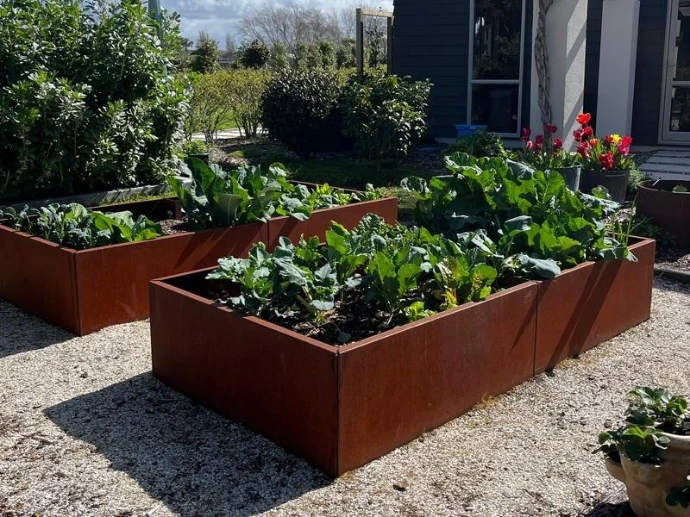
Save your back: A bed built to waist height means no more stooping. You can harvest crisp greens standing completely upright.
The Material Problem: Why Timber is Out
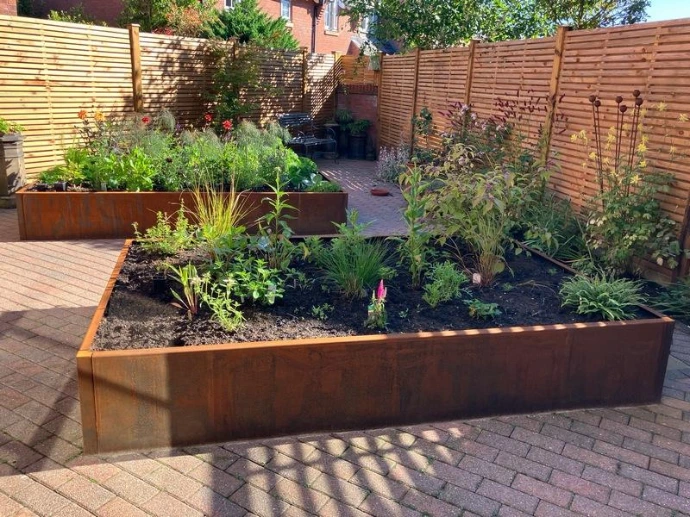
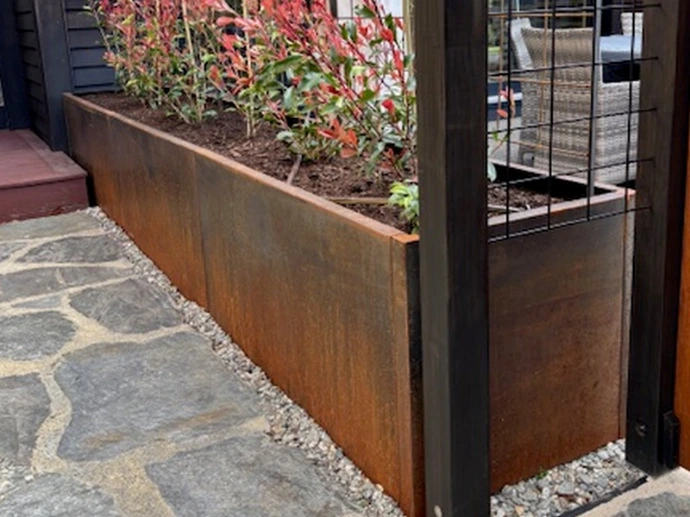
When space is tight, use corten steel.
Why Corten is the Ultimate Garden Planter Idea:
For decades, the standard approach was thick, pressure-treated timber sleepers. But timber has fatal flaws.
First, sleepers are incredibly bulky. A standard wooden sleeper eats up 6 to 8 inches of your yard perimeter on every side. In an average backyard, you are losing valuable square footage to thick, dead wood.
Second, wet soil rots timber. Even treated wood eventually bows, cracks, and decays under the pressure of damp earth. Finally, hauling wet, heavy logs across your lawn will ruin your grass and wreck your shoulders.
Check out our 100's of costed kitset planters
Corten Steel: The Professional's Choice
If you want a modern, lasting edge, look to weathering steel.
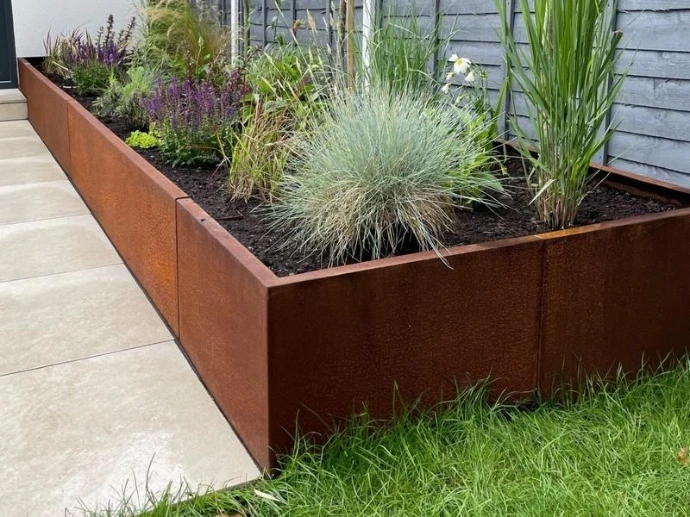
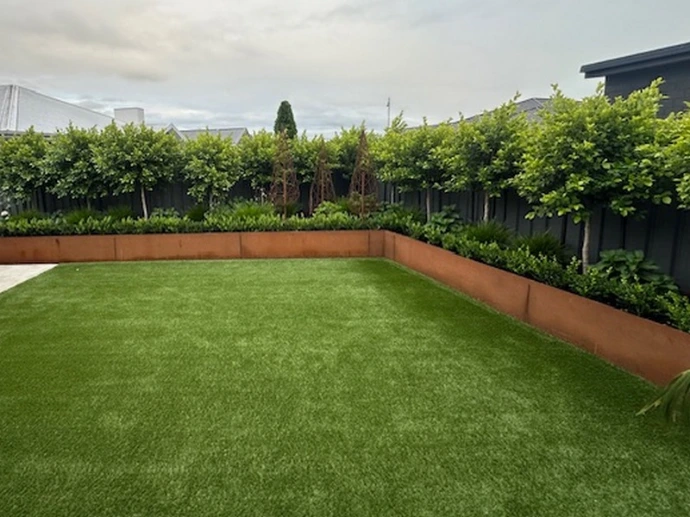
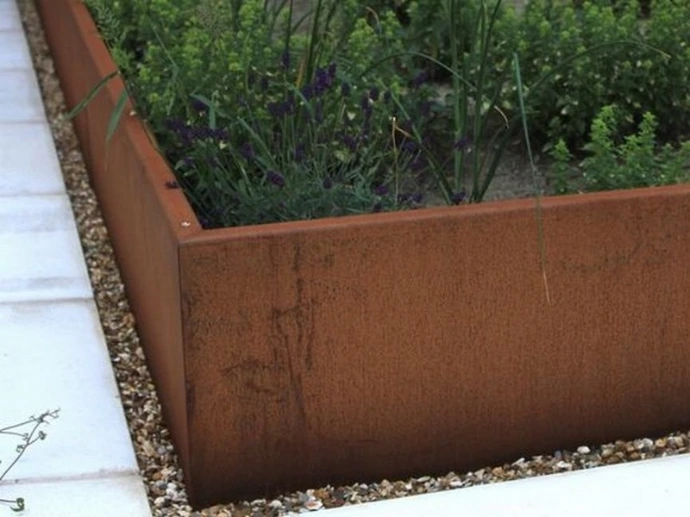
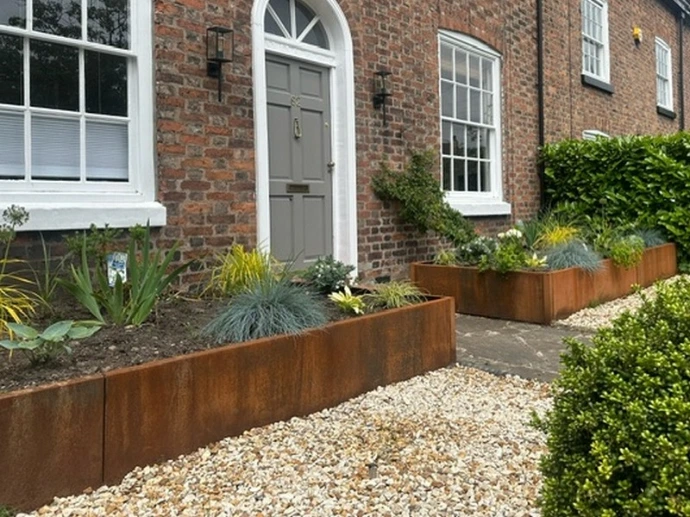
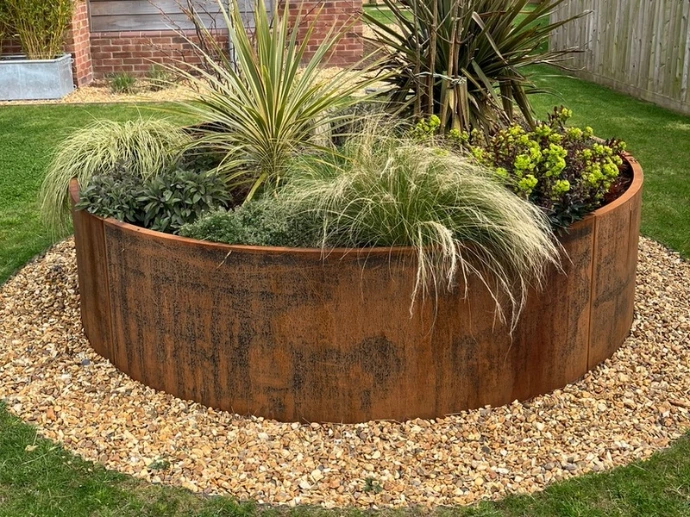
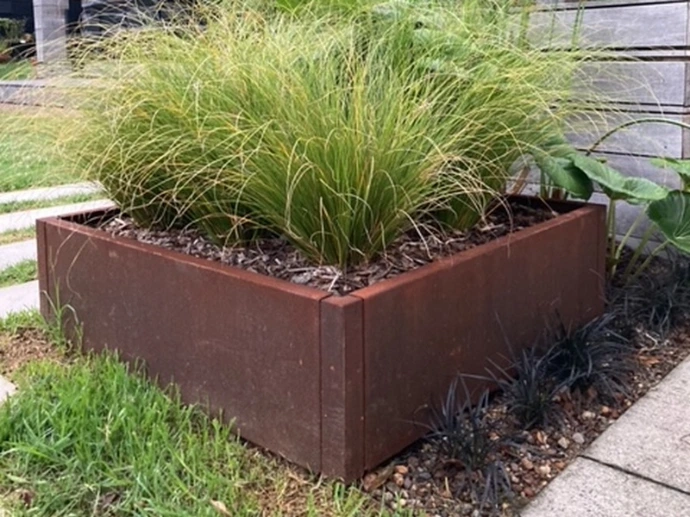
Corten steel starts as a cold grey metal. After a few weeks exposed to rain and morning dew, it cures into a rich, textured patina. The surface bleeds into deep bronze, fiery orange, and raw umber. It feels rough and warm under the hand. Unlike rust that eats through cheap metal, this patina forms a protective crust that stops further corrosion.
Why Corten Beats Timber
Maximum soil, minimum footprint: Corten planters are remarkably thin, usually around 2mm. Because the steel wall takes up almost zero width, you get inches of vital soil space back. You maximize your growing area without letting the planter encroach on your patio or lawn.
Indestructible edges: Steel will not warp, snap, or rot. The crisp, clean lines stay rigidly straight against the organic chaos of your plants.
Heat retention: The dark metal absorbs the early spring sun, warming the soil faster than wood. This lets you plant your seeds weeks earlier than in ground-level dirt.
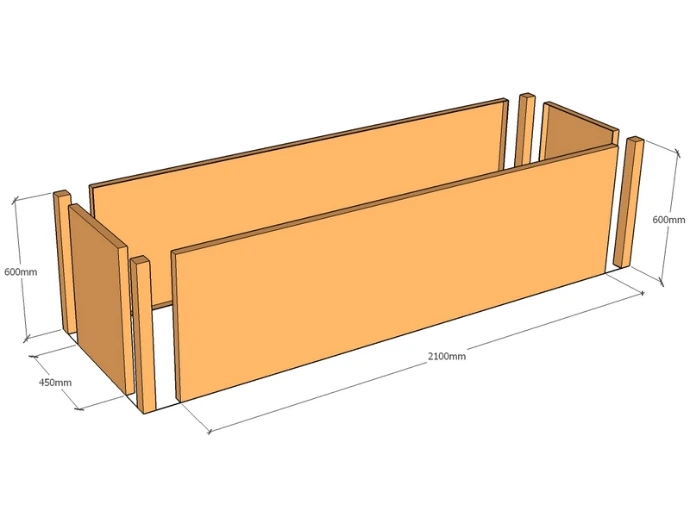
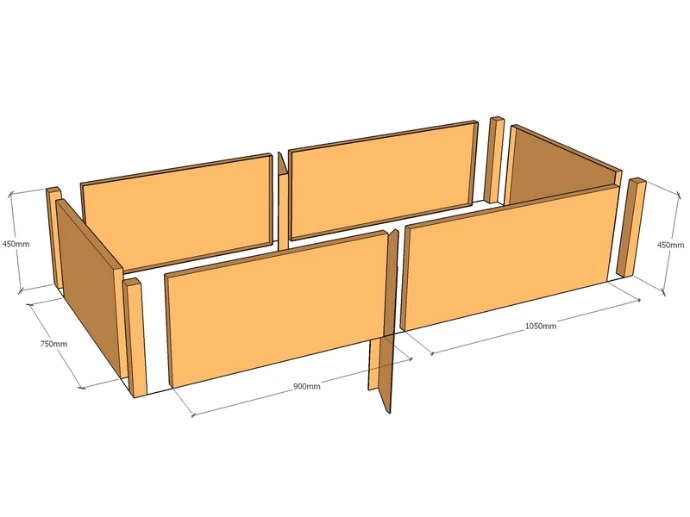
Modular Assembly: The panels bolt together quickly. No mortar. No heavy machinery. No paying a brickie by the hour.
Built-in Strength: Corten is industrial steel at its core. It holds back wet, heavy soil without bulging or snapping under pressure.
Zero Maintenance: No painting. No sealing. No scraping off rot. The weather actually makes the steel stronger and richer in color.

3 Corten Raised Garden Bed Ideas to Try
Even with the best kitset, you have to get the basics right. Over four decades, I have seen what makes a retaining wall stand and what makes it fall over. Here is how you build it right the first time:
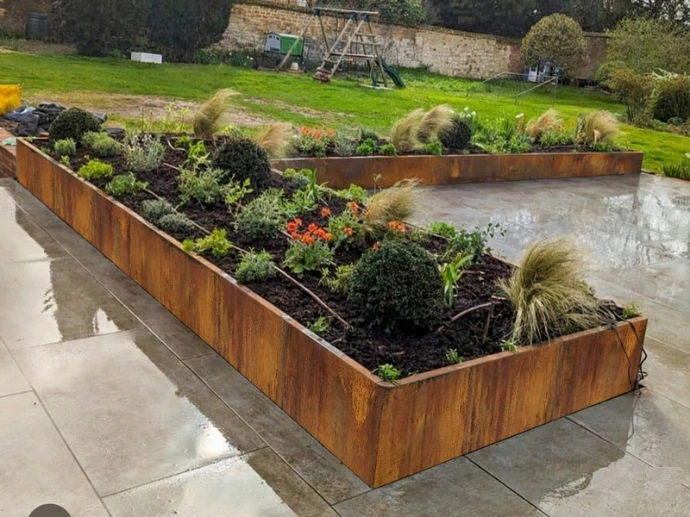
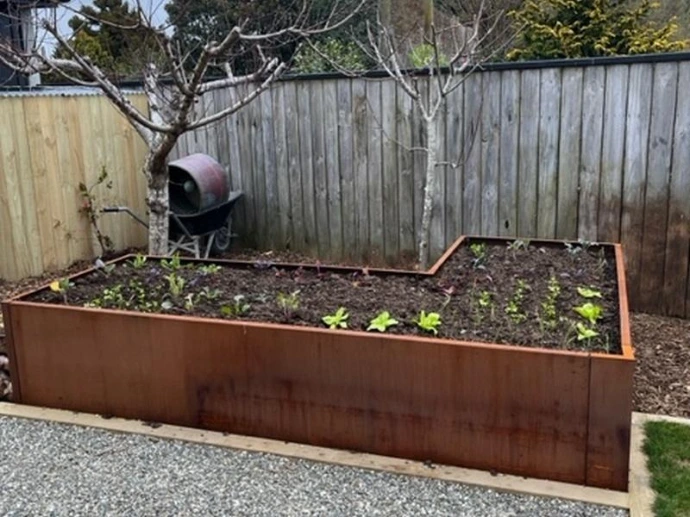
The Stepped Herb Corner: Use varying heights of steel beds tucked into a right-angle corner of your patio. Plant creeping thyme spilling over the rigid steel edge, backed by tall, woody rosemary.
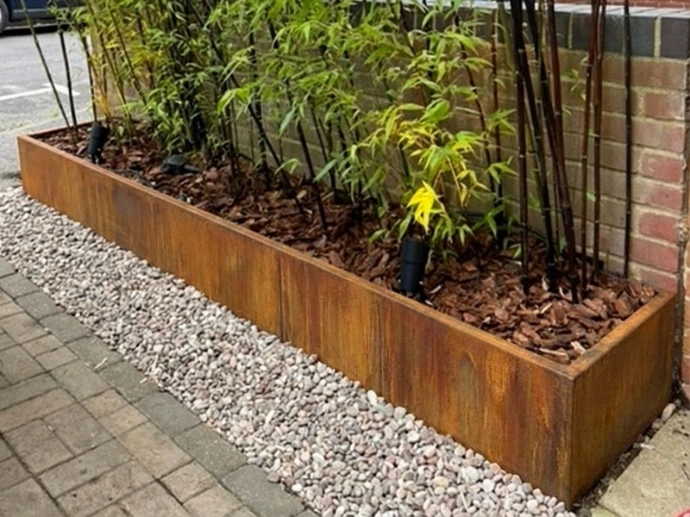
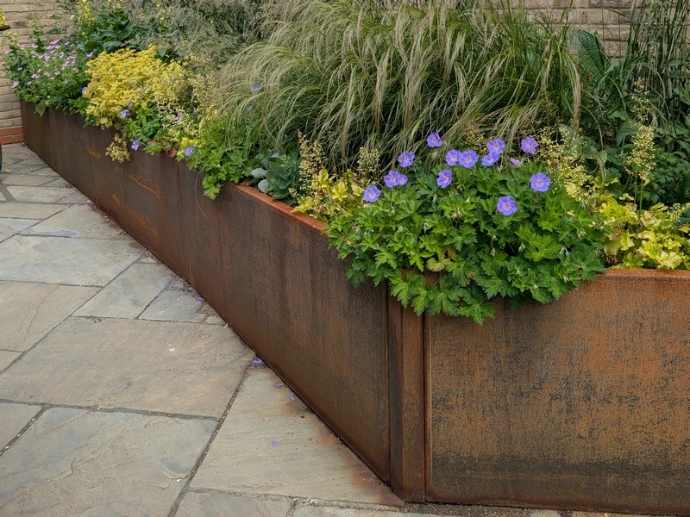
The Clean Perimeter: Run long, narrow, waist-high corten troughs along a fence line. It creates a sleek boundary, hides ugly fencing, and brings the weeding right to your fingertips.
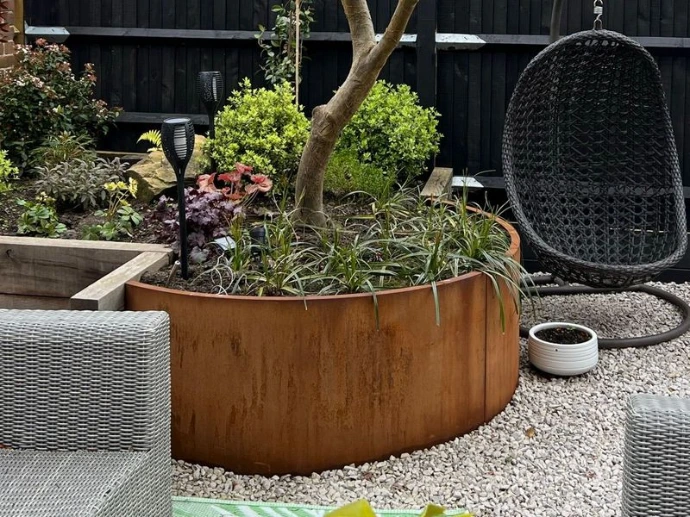
The Courtyard Centerpiece: Place a large, circular corten bed right in the middle of a gravel courtyard. Fill it with dark, rich soil and a single specimen Japanese Maple. The shifting reds of the leaves will mirror the rusted steel perfectly.
Check out our 100's of costed kitset planters
The Assembly: Skipping the Sweat
I know the dread of a weekend project that turns into a month-long chore. Measuring cuts, fixing mistakes, and dealing with rusty brackets drain the fun out of DIY.
You get a permanent, structural line that defines your garden and looks better every time it rains. It’s the professional’s shortcut to a high-end yard without the contractor’s price tag.
This is why I recommend the kitset systems from www.cor-ten-steel.co.uk. They strip the headache out of the build.
Quick and easy assembly: These kitsets arrive flat-packed. You do not need a circular saw or a truck to get them home.
Precision engineering: The panels are laser-cut. They slot perfectly together and bolt tight.
Done before lunch: You can unbox the kit, follow the straightforward steps, and bolt together a plumb, rigid, professional-grade planter in an hour. It goes from a flat box to ready-for-soil in a single morning.
Would you like me to help you calculate the specific number of Corten modules you'll need based on your planter's height. width and length?
Then email [email protected] with pics and sketches.
Frequently Asked Questions
Does Corten steel rust all the way through?
No. That is the magic of weathering steel. The outer layer oxidizes to form a protective coating that seals the inner steel from oxygen. It rusts to protect itself, unlike mild steel which rusts away.
Is it safe for vegetable gardens?
Yes. Corten steel is non-toxic and safe to use around edibles. It does not leach harmful chemicals into the soil like treated pine often can.
Not sure what to order?
Please email us pic/sketches of your project, we will then get back to you with suggested parts and costings.
21st Mar 2026